HISTORY OF PRIVATE INVESTIGATIONS
The history of private investigations is a rich and evolving narrative that dates back thousands of years. Long before modern law enforcement agencies existed, individuals and governments relied on trusted agents to gather intelligence, investigate wrongdoing, and protect assets.
Private investigation, in one form or another, can be traced to ancient civilizations, including Sumerian and Egyptian societies, where intelligence gathering and surveillance were essential to governance and security.
Early Origins of Espionage and Investigation
One of the earliest recorded references to espionage appears in the Old Testament, specifically in the Book of Numbers. In this account, Moses sent twelve men—leaders of their respective tribes—to spy on the land of Canaan during the Israelites’ journey from Egypt to the Promised Land.
This early example demonstrates a foundational principle of private investigation that still exists today: the collection of information to assess risk, opportunity, and truth.
The Birth of the Private Investigation Agency
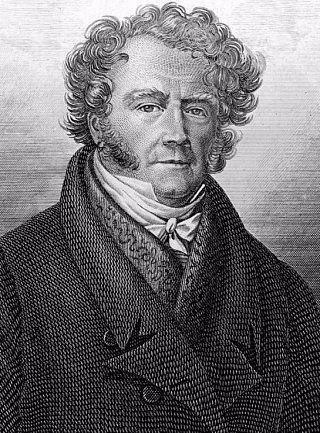
While investigative practices existed for centuries, the first formal private detective agency is widely credited to Eugène François Vidocq, a French soldier, privateer, and former criminal.
In 1833, Vidocq founded Le Bureau des Renseignements (“The Office of Intelligence”) in France. The agency was staffed largely by former criminals who possessed firsthand knowledge of criminal behavior—an approach that was controversial at the time and led to repeated attempts by authorities to shut the agency down.
Despite legal challenges, Vidocq’s influence on investigative practices was profound.
Vidocq’s Contributions to Modern Investigation
Vidocq is considered a pioneer of modern criminology. His contributions to investigative science include:
• Systematic record-keeping of criminal offenders
• Early applications of ballistics
• Development of plaster casting of shoe prints
• Invention of indelible ink and tamper-resistant bond paper
• Early use of anthropometrics, the study of human physical characteristics
Many of Vidocq’s investigative methods remain foundational to both private investigators and law enforcement agencies today. Beyond his professional work, Vidocq was also known as a philanthropist and claimed he never informed on individuals who stole out of necessity.
The Evolution of Private Investigators
The private investigation industry evolved primarily in response to limitations within traditional law enforcement. In the 18th and 19th centuries, police forces were often underfunded, understaffed, or unwilling to intervene in civil disputes.
As a result, private investigators were frequently hired to:
• Resolve labor disputes
• Conduct private security operations
• Protect property and assets
• Gather intelligence during periods of civil unrest
In many cases, private investigators acted as a parallel enforcement mechanism for individuals and organizations seeking protection and accountability.
Private Investigators in the United States
In the United States, Allan Pinkerton emerged as one of the most influential figures in the history of private investigation.
After exposing a counterfeiting ring, Pinkerton was appointed in 1849 as Chicago’s first police detective. Shortly thereafter, he partnered with attorney Edward Rucker to form the Pinkerton National Detective Agency, which still operates today as Pinkerton Consulting & Investigations.
The term “private eye” is believed to have originated from Pinkerton’s iconic logo: a wide-open eye accompanied by the slogan “We Never Sleep.”
Pinkerton and the Civil War Era
During the American Civil War, Allan Pinkerton served as head of the Union Intelligence Service, the predecessor to the United States Secret Service. Under his leadership, Pinkerton agents:
• Conducted undercover operations
• Gathered Confederate military intelligence
• Successfully thwarted an assassination attempt against President Abraham Lincoln
Pinkerton’s work helped establish the credibility and necessity of professional private investigators in national security matters.
The Role of Private Investigators Today
Today, private investigators play a critical role across multiple sectors, including insurance fraud investigations, criminal defense and civil litigation support, missing persons investigations, corporate and internal investigations, surveillance, and background investigations.
With continued advancements in technology, digital intelligence, and forensic methods, private investigation services continue to evolve, offering more accurate, efficient, and legally defensible results than ever before.
Modern Private Investigation Services
While the tools have changed, the mission remains the same: to discover facts, verify information, and provide clarity where uncertainty exists.
Professional private investigators today operate within strict legal and ethical boundaries, delivering services that support individuals, businesses, attorneys, and insurance carriers alike.